
Shibuya Crossing
Three thousand people cross at once. Watch from the Starbucks above it, then cross yourself. Free and genuinely remarkable.
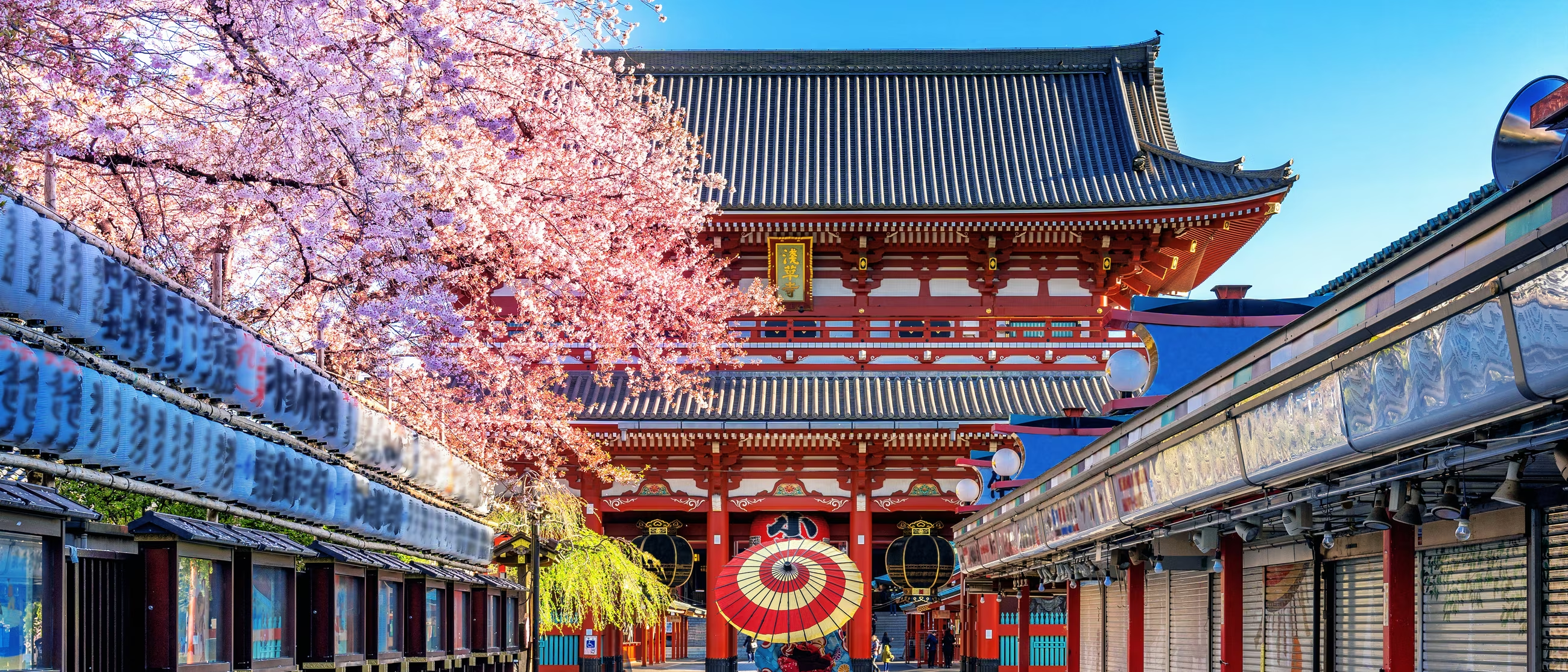
The largest metropolitan area on earth, and one of the quietest, cleanest and most orderly places you will ever visit. Nothing about it works the way you expect, and all of it works.
There is no single centre. Each major station has its own downtown, and they feel nothing alike.
Shibuya is young, loud and where the famous crossing is. Shinjuku has the tallest buildings and the densest nightlife. Asakusa is old Tokyo, low-rise and temple-centred. Ginza is expensive and elegant. Trying to see all of it is pointless; pick three or four wards and go deep. Five nights is the minimum that makes the flight worth it, and most people wish they'd booked seven. It's also the safest big city in the world by a distance, which changes how you move around at night.
The temples and the towers matter less than the ordinary things — a train station, a convenience store, a back street at night.
Three thousand people cross at once. Watch from the Starbucks above it, then cross yourself. Free and genuinely remarkable.

Tokyo's oldest temple, founded in 628. Go at seven in the morning when the approach street is empty and the incense is lit.

Alleys of six-seat yakitori bars under the Shinjuku tracks. Smoky, tiny, and the best evening in Tokyo.

Toyosu is the working fish market with the tuna auction; Tsukiji outer market is where you eat. Both need an early start.

Ninety minutes out. Hot springs, a lake, and Fuji on a clear day. The loop by train, cable car and boat is a proper day.

Digital art you walk through, in the dark, barefoot in places. Book weeks ahead — it sells out permanently.
Stay near a major JR or metro hub. In Tokyo, the station is the neighbourhood.
The biggest station in the world, and the best transport links. Nightlife, department stores and easy day trips.
The crossing, the shopping and a young crowd. Well connected and rarely quiet.
Low-rise, temple-centred and the cheapest central option. A little further from the nightlife.
Near Tokyo Station. Elegant, quiet at night, and the best base for bullet-train day trips.
Late March to early April for the cherry blossom, and October to November for autumn colour and the clearest weather.
Blossom season is spectacular and unpredictable — the front moves north over about ten days and forecasts firm up only a fortnight ahead, so book flexibly. Summer is hot and very humid, with a rainy season in June. Autumn is our pick: warm days, low humidity, and the best odds of seeing Fuji. Winter is cold, dry and bright, with the fewest visitors and the lowest prices.
13 hours direct to Haneda (HND) or Narita (NRT). Haneda is far closer to the centre.
Monorail or Keikyu line from Haneda in about 30 minutes; Narita Express from Narita in an hour.
Japanese yen. Carry cash alongside cards.
The metro and JR network are dense and punctual. A Japan Rail Pass only pays off if you're leaving Tokyo for Kyoto or beyond.
We'll come back with hotels near the right station, the rail pass costed properly, and the payment plan written out in full.
Five in Tokyo, or ten to twelve if you're adding Kyoto and Hakone. It's a long way to go for a short trip.
Only if you're travelling between cities. For Tokyo alone it isn't — a Suica card is cheaper and simpler.
Less than you'd fear. Station signage is bilingual, translation apps work well, and people go out of their way to help.
Yes — a Gulf or Singapore stopover turns thirteen hours into two shorter flights and often costs no more. Ask us to price it.
Flights, a central hotel and transfers as one package. We book the museum and gallery slots that sell out, and tell you which ones to book yourself.
Guide prices, per person, based on two sharing, including return flights, central accommodation and airport transfers. They indicate what a break of this type has typically cost and are not an offer or a quotation. Your price depends on dates, party, departure airport and availability, and is confirmed in writing before any payment is taken.
Ready-built itineraries with flights, transfers and internal hops booked as one package, ATOL protected. Every one can be reshaped around your dates.

12 nights · Apr–Oct · from £1,749pp

13 nights · Nov–Mar · from £1,649pp

13 nights · Nov–Mar · from £2,099pp

13 nights · Dec–Mar · from £1,599pp

14 nights · Apr–Oct · from £1,849pp

15 nights · Apr–Oct · from £2,199pp

14 nights · Mar–Apr, Oct–Nov · from £2,999pp

12 nights · Nov–Mar · from £1,849pp


